Category: Paris Insights

  • Croq’Anime and Other Animation Festivals: What to Compare Before Choosing

    Croq’Anime and Other Animation Festivals: What to Compare Before Choosing

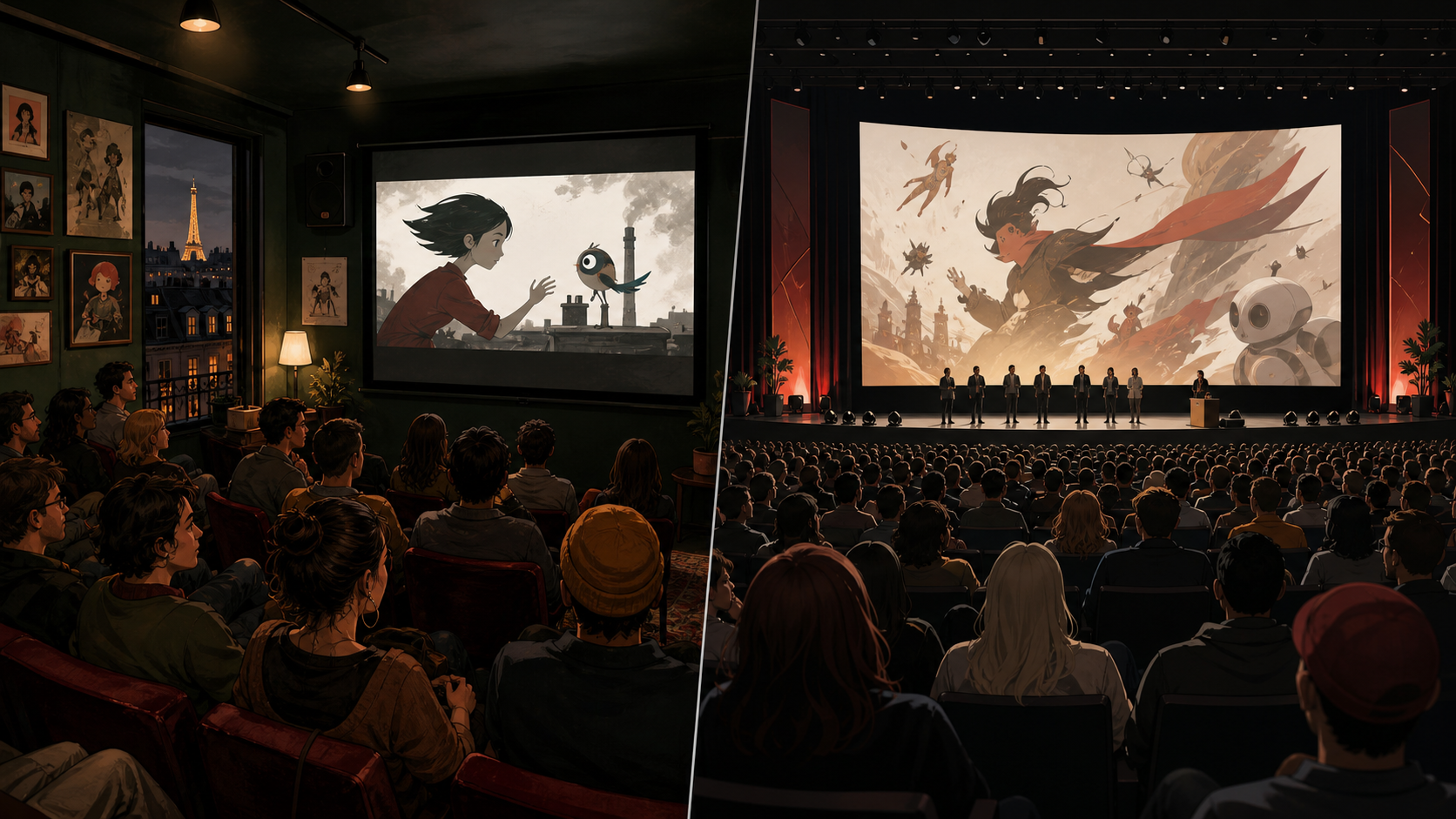
    Animation festivals can look similar from a distance: films are selected, audiences gather, awards may be presented, and creators have an opportunity to show their work. In practice, however, the experience can vary enormously. A neighborhood-scale short-film festival does not serve the same purpose as a large international industry event, and a student showcase offers something different from a commercial convention built around famous franchises.
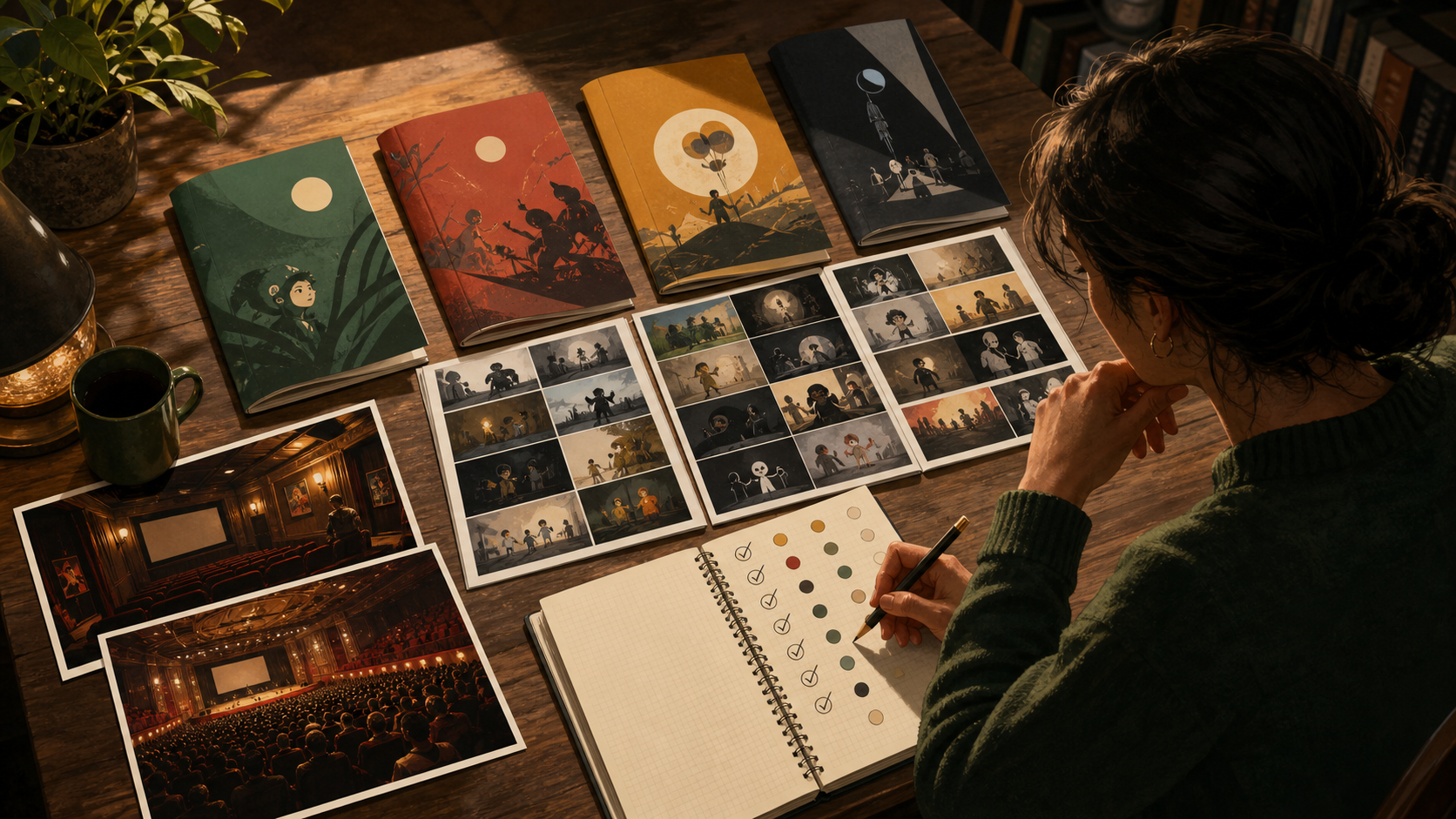
    Reader comparing animation festival programs, screening scale, and short-film discovery options at a table.
    Program focus, screening scale, and short-film discovery provide useful points of comparison.

    Croq’Anime historically represented the smaller, independent side of animation-festival culture in Paris. Its identity was connected with animated shorts, emerging creators, student work, international selections, and an atmosphere that made animation accessible outside the world of major theatrical releases. A festival such as Annecy operates at a much larger international and professional scale, with a major industry market alongside public screenings.

    Neither model is automatically better. The right choice depends on what you want to watch, learn, discover, or accomplish.

    Start With the Festival’s Main Purpose

    The first comparison should be the event’s basic purpose.

    Some animation festivals are primarily public cultural events. Their value comes from gathering a selection of films in one place and giving viewers access to work they might never encounter through ordinary cinemas or streaming platforms.

    Other festivals operate partly as industry marketplaces. They may attract producers, distributors, broadcasters, studios, journalists, and professional organizations looking for projects, partnerships, or business opportunities.

    Student showcases place more emphasis on new talent and educational development. Commercial conventions may focus on recognizable characters, merchandise, celebrity appearances, gaming, television, comics, or major entertainment brands.

    Croq’Anime was not designed as a giant commercial expo. Its historical character was closer to an independent film showcase where animated shorts and their creators were the center of attention. That made it different from an event whose main attraction is scale, prestige, business activity, or famous intellectual property.

    Before choosing any event, ask:

    • Is the main purpose artistic discovery?
    • Is it professional networking?
    • Is it education?
    • Is it entertainment built around familiar franchises?
    • Is it a competition?
    • Is it a marketplace?
    • Is it a local cultural gathering?

    The answer will shape almost every other part of the experience.

    Compare Short Films With Feature-Length Programming

    Short animation creates a different viewing experience from an animated feature.

    A feature gives the filmmaker time to build a world, develop characters, and sustain a story over a longer period. A short film may have only a few minutes to establish its visual language and make an emotional, comic, dramatic, or experimental point.

    A program of animated shorts can move rapidly between styles. One film may use hand-drawn characters, another stop motion, another computer animation, and another a mixture of photography, collage, live action, paint, or found objects.

    This variety is one of the strongest reasons to attend a short-film festival. You are not committing to one visual world for an entire evening. You are encountering many filmmakers and approaches in a concentrated form.

    The tradeoff is that short-film programs can be unpredictable. Some work may be immediately accessible, while other films may be abstract, uncomfortable, unfinished-looking, or deliberately challenging. That unpredictability is part of the appeal for viewers who want discovery, but it may not suit someone looking for one polished, familiar story.

    Croq’Anime’s historical emphasis on animated shorts placed it firmly in the discovery category. A viewer interested in independent work, student films, unusual techniques, or emerging creators would likely value that more than someone seeking a major studio premiere.

    Decide Whether You Want Discovery or Familiarity

    Animation festivals often sit somewhere between two goals:

    Discovery introduces audiences to unfamiliar filmmakers, experimental techniques, international work, and films without ordinary distribution.

    Familiarity draws audiences through well-known studios, characters, directors, franchises, or commercial releases.

    Neither approach is wrong. They satisfy different expectations.

    An independent festival can surprise you. You may enter without recognizing a single title and leave remembering a three-minute film made by a student or a small creative team.

    A major festival or convention may offer the excitement of seeing anticipated work, hearing from established professionals, or experiencing the broader culture surrounding well-known animation.

    Croq’Anime’s value came largely from work outside the mainstream. That meant the festival’s appeal depended less on celebrity recognition and more on curiosity. The audience had to be willing to encounter films without a familiar brand guaranteeing what the experience would be.

    When comparing events, consider whether you want to be surprised or reassured. A discovery-oriented festival asks more from the viewer, but it can also introduce work that would otherwise remain invisible.

    Compare Audience Atmosphere and Scale

    Festival size changes the atmosphere.

    A smaller event can feel personal. Viewers, students, filmmakers, and organizers may share the same spaces, and a screening can feel like a direct encounter with the people responsible for the work.

    A large international festival offers greater scale: more screenings, more venues, larger professional participation, wider media attention, and a much denser schedule. That scale can create energy and opportunity, but it can also make the event harder to navigate.

    Croq’Anime’s Paris setting and historical association with the Théâtre de Ménilmontant gave it the character of a focused cultural event rather than a giant industry gathering. Annecy, by comparison, is internationally known for combining a major public festival with a professional animation market.

    The choice is not simply “small versus large.” Consider what scale does for your goals:

    • Smaller events may offer intimacy and easier discovery.
    • Larger events may offer range, visibility, and professional opportunity.
    • Neighborhood events may feel connected to the surrounding community.
    • destination festivals may justify an entire trip but require more planning.

    A casual viewer may prefer an event where attending one program feels complete. A professional may value a larger event with many meetings, screenings, and industry activities.

    Understand Selection and Awards

    Selection and awards are related, but they are not the same.

    A selected film has been chosen to appear within a festival’s program. That alone can be meaningful, especially for students, independent filmmakers, and small production teams. It places the work before an audience and connects it with other films selected for the event.

    An award gives additional recognition to a film, filmmaker, composer, designer, or other creative contribution. Awards may reflect technical achievement, storytelling, originality, music, visual design, humor, emotional impact, or a jury’s particular priorities.

    Viewers can use award winners as one way to begin exploring a large program, but awards should not be treated as a complete ranking of artistic worth. A winning film may reflect the jury’s standards, while another selected film may connect more strongly with your own interests.

    For filmmakers, the most useful question is not simply whether a festival gives awards. It is whether the event’s selection and recognition system fits the type of work being submitted.

    A visually experimental short may suit one festival better than a dialogue-heavy comedy. A graduation film may find a stronger audience in a student-friendly program than in an event centered on commercial feature releases.

    Compare Opportunities for Viewers and Filmmakers

    A viewer and a filmmaker may judge the same festival very differently.

    A viewer may care about:

    • the quality and variety of the films;
    • the length of the programs;
    • language and subtitles;
    • age suitability;
    • venue comfort;
    • ticket access;
    • opportunities to hear filmmakers discuss their work.

    A filmmaker may care about:

    • eligibility;
    • submission rules;
    • permitted running time;
    • fees;
    • premiere requirements;
    • accepted techniques;
    • jury composition;
    • awards;
    • professional visibility;
    • whether the audience is likely to understand the work.

    Someone attending as a student may be interested in both sides. Watching selected work can become a practical education in pacing, sound, visual clarity, and how a short film communicates with an audience.

    Croq’Anime historically welcomed work from different experience levels, including student and independent creators. That kind of openness can be valuable to artists who are still developing their voice and may not yet have access to larger professional networks.

    Consider Location and Cultural Setting

    The city and venue affect how a festival feels.

    A neighborhood theater can create a different relationship between the event and its audience than a large convention center or multi-venue industry festival.

    Paris offers a natural setting for animation because the medium overlaps with cinema, illustration, graphic design, visual art, music, photography, performance, and storytelling. An animation event in Paris can therefore feel connected to the city’s broader cultural life rather than isolated as a specialist activity.

    Croq’Anime’s association with Ménilmontant supported its smaller, independent identity. The setting reinforced the idea of animation as something that could belong to a neighborhood audience as well as students and professionals.

    Annecy offers a different setting. The festival transforms its host city into an international center for animation, drawing visitors and industry participants from around the world.

    When comparing events, ask whether the location is merely where the festival happens or an important part of the experience itself.

    Check Practical Details Without Letting Them Define the Choice

    Practical details matter, but they should come after you understand the event’s purpose.

    Before attending, compare:

    • current operating status;
    • dates;
    • venue or venues;
    • program length;
    • ticketing;
    • reservations;
    • language and subtitles;
    • age recommendations;
    • accessibility;
    • transportation;
    • accommodation, if travel is required.

    An event may look perfect artistically but be a poor practical fit. A screening may conflict with other plans, require travel across a city, or present films without subtitles in a language you understand.

    At the same time, do not choose an event only because it is convenient. A slightly less convenient festival may offer a much stronger match for your interests.

    A Simple Way to Make the Final Choice

    Choose the event that best matches your main reason for attending.

    Choose a smaller independent festival when you want:

    • short-film discovery;
    • emerging and student creators;
    • experimental work;
    • a more intimate atmosphere;
    • animation treated primarily as an art form.

    Choose a major international festival when you want:

    • a large and varied program;
    • industry visibility;
    • major professional participation;
    • premieres;
    • markets, conferences, or broader networking opportunities.

    Choose a commercial convention when you want:

    • familiar franchises;
    • merchandise;
    • celebrity guests;
    • fan culture;
    • entertainment extending beyond film.

    Choose a retrospective or museum program when you want:

    • historical context;
    • concentration on one artist, studio, technique, or period;
    • curated interpretation;
    • deeper study rather than festival competition.

    Croq’Anime historically occupied a useful place within this spectrum. It was smaller than the largest international festivals, more focused on independent short animation than commercial spectacle, and accessible to viewers and creators who wanted to experience animation beyond mainstream releases.

    The best animation event is not necessarily the largest or most famous. It is the one whose films, audience, scale, and purpose match what you hope to discover.

    Festival identities, schedules, locations, ticketing, submission rules, and programming can change. Confirm current information with the relevant organizer, venue, or primary source before making plans.

  • How to Explore Animation in Paris: A Beginner’s Guide

    How to Explore Animation in Paris: A Beginner’s Guide

    Paris is known around the world for painting, fashion, architecture, literature, and cinema, but the city also offers a rewarding path into the art of animation. For someone new to the subject, animation can initially seem divided between children’s entertainment, major studio films, technical software, and highly experimental work. In reality, it is a broad form of visual storytelling that combines drawing, movement, sound, design, performance, and filmmaking.

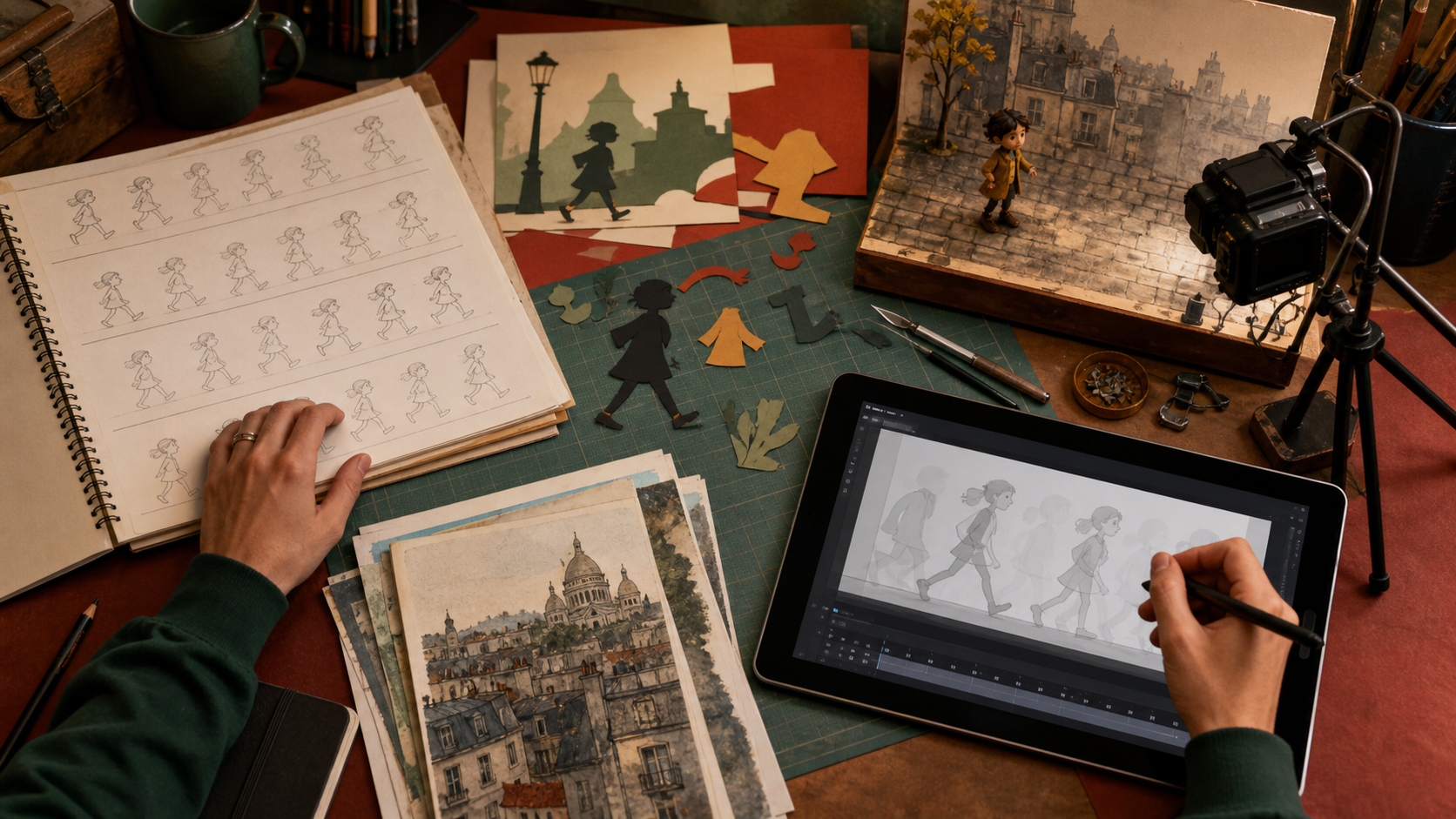
    Hands comparing hand-drawn frames, cut-paper pieces, stop-motion objects, and digital animation tools.
    Hand-drawn, cut-paper, stop-motion, and digital workflows offer distinct ways to begin animating.

    The best way to begin exploring animation in Paris is not to try to understand everything at once. Start with short films, learn to recognize a few major animation techniques, and pay attention to the kinds of stories and visual styles that interest you most. Festivals, independent screenings, student showcases, exhibitions, and cultural programs can all provide entry points into a medium that is much more varied than mainstream theatrical releases suggest.

    Start With Animated Short Films

    Short films are one of the easiest ways to discover the range of animation. A single program may present several films with completely different techniques, tones, countries of origin, and artistic goals. One film may be funny and accessible, while the next may be abstract, dramatic, political, musical, or emotionally difficult.

    This variety helps beginners understand that animation is not one genre. It is a method of creating moving images that can be used for comedy, fantasy, documentary work, advertising, experimental art, education, personal storytelling, or adult drama.

    Short films are also useful because they allow you to experience more creators in less time. Instead of committing to one feature-length production, you can watch several visual approaches and begin identifying what holds your attention. You may discover that you prefer hand-drawn character animation, stop-motion sets, minimalist graphic work, computer-generated imagery, or mixed-media films that combine several methods.

    Learn the Main Animation Techniques

    You do not need technical training to appreciate animation, but recognizing a few common approaches will make screenings more interesting.

    Traditional or hand-drawn animation creates movement through a sequence of drawings. The finished work may look polished and fluid, loose and expressive, or deliberately rough.

    Stop-motion animation photographs physical objects one frame at a time. Puppets, clay, paper, household objects, or carefully built miniature sets can all be used.

    Computer animation includes both two-dimensional and three-dimensional work. It can imitate traditional drawing, create realistic environments, or build completely stylized worlds.

    Cutout animation moves flat pieces of paper, photographs, or digital shapes. Its apparent simplicity can produce highly distinctive results.

    Mixed-media animation combines drawing, photography, live action, collage, computer imagery, paint, objects, or other materials.

    As you watch, consider whether the chosen technique supports the story. A technically complex film is not automatically better than a simple one. The strongest animation usually creates a meaningful relationship between movement, design, sound, timing, and emotion.

    Use Festivals as Discovery Tools

    Animation festivals can introduce viewers to films that may never receive ordinary theatrical distribution. Student projects, independent productions, experimental shorts, and work from small studios often depend on festivals to reach a public audience.

    Croq’Anime, the historical name associated with the Paris animation festival, offers a useful example of this kind of platform. Its documented history reflects an emphasis on animated short films and on giving selected work a public setting. Historical materials connected with the festival also show how animation events can bring student films, independent creators, and more established professionals into the same broader conversation.

    A festival program should not be treated as a list of films that every viewer is expected to like. Selection is a curatorial decision, not a guarantee of personal taste. Part of the experience is encountering unfamiliar work and deciding what succeeds for you.

    After a screening, ask yourself:

    • Which film remained in your mind?
    • Did the visual style strengthen the story?
    • How did sound or music affect the mood?
    • Did the film communicate clearly without dialogue?
    • Was the movement realistic, exaggerated, restrained, or symbolic?
    • Did the ending feel earned?

    These questions help turn casual viewing into a deeper appreciation of the craft.

    Look Beyond Famous Characters and Studios

    Beginners often enter animation through familiar franchises, television series, or major studios. Those productions can be valuable, but they represent only one part of the medium.

    Independent animation may be less polished in a commercial sense, yet more personal or experimental. A filmmaker working with a small team can take visual risks that would be difficult within a large production. Student films may contain uneven elements, but they can also introduce striking ideas and new artistic voices.

    Paris is a particularly suitable place to approach animation through this wider arts perspective. The city’s connection to cinema, illustration, graphic design, photography, performance, and visual art makes it natural to view animation as part of a larger creative culture rather than as an isolated form of entertainment.

    Choose Programs That Match Your Interests

    Before attending an animation event, look at the available description and decide what you want from the experience.

    A family-oriented program may emphasize accessible stories and age-appropriate material. An experimental program may focus more on visual ideas than conventional storytelling. A student showcase may reveal emerging talent and educational work. A retrospective may explore the career of one filmmaker, studio, school, or artistic movement.

    Also consider practical questions:

    • Are the films presented in a language you understand?
    • Are subtitles available?
    • Is the material appropriate for the intended audience?
    • Is the program made of shorts, features, or both?
    • Does the event require advance reservations?
    • Is the venue accessible for your needs?

    Answering these questions prevents disappointment and helps you select an experience that fits your interests.

    Build a Simple Animation Day in Paris

    A beginner does not need an overloaded schedule. A useful animation-focused day might include one screening or festival program, time to reflect afterward, and a related visual-arts activity.

    You could pair animated films with illustration, design, photography, film history, or contemporary art. The goal is not to force every activity to be specifically labeled “animation.” It is to notice how animation draws from many creative fields.

    Afterward, save the names of films, directors, schools, or studios that interested you. Many short films travel through festivals before becoming easier to find elsewhere. Following the creators can lead you to future work and help you develop a more personal understanding of the medium.

    Begin With Curiosity, Not Expertise

    You do not need to know software, production terminology, or animation history before attending a screening. The most important skill is attention.

    Notice what moves, what remains still, how long a scene lasts, how sound changes an image, and how a filmmaker guides your eye. Over time, you will begin recognizing techniques and artistic choices naturally.

    Paris offers a strong setting for that discovery because animation can be approached alongside the city’s wider traditions of art and cinema. Start with a short-film program, remain open to unfamiliar styles, and follow the work that genuinely interests you.

    Event identities, schedules, venues, admission policies, language options, and programming can change. Confirm current details with the relevant organizer, venue, or primary source before making plans.
  • The Paris Animation Film Festival “Croq’Anime”

    The Paris Animation Film Festival “Croq’Anime”

    Croq’Anime: The Paris Festival That Celebrates Animation Beyond the Mainstream

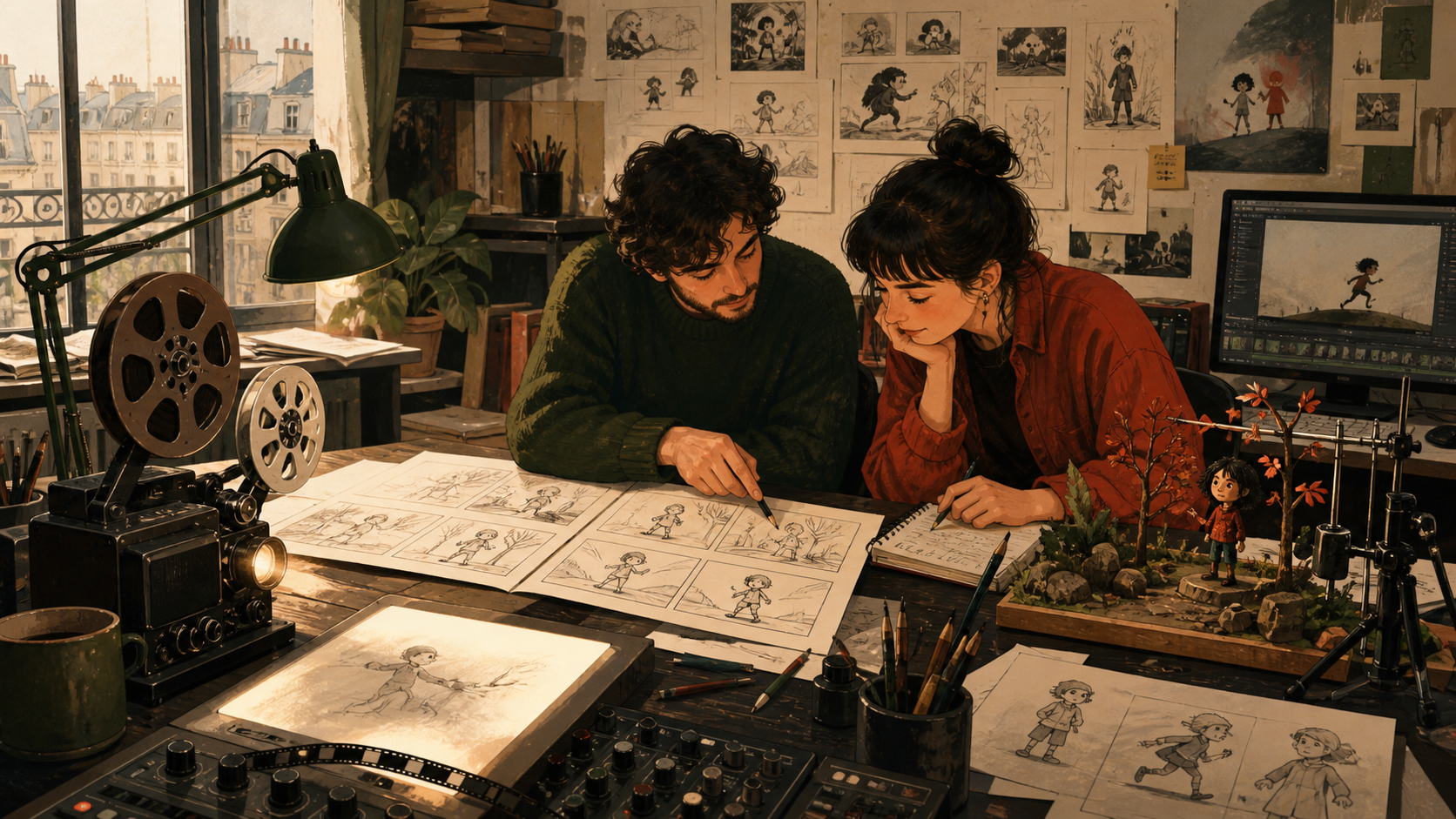
    Two animators reviewing storyboards, drawn frames, and a stop-motion set in a compact Paris studio.
    Storyboards, drawn frames, editing tools, and a stop-motion set reflect the craft behind independent animation.

    Paris has no shortage of major cultural events, but some of its most interesting festivals are not the largest or most commercial. Croq’Anime—the name historically associated with the Festival du Film d’Animation de Paris—is one of those smaller cultural projects that helped independent animation find an audience in the French capital.

    The festival is now generally presented internationally as the PIAFF, or Paris International Animation Film Festival. However, the names Croq’Anime and PIAFF have been used in overlapping ways. Croq’Anime was the nonprofit association responsible for organizing the festival, while earlier posters, event listings, and press coverage also commonly used Croq’Anime as the public name of the festival itself. The most accurate way to understand it is as the organization and early identity behind the Paris animation festival that later became more widely recognized as PIAFF.

    A Festival Created for Animated Short Films

    The Paris animation festival was established in 2008 with a focus on animated short films. Rather than limiting its program to major studios, famous franchises, or commercially successful feature films, it created space for independent directors, students, recent graduates, professional animators, and experimental filmmakers.

    The festival’s mission was built around a simple but important idea: animation should be treated as a complete form of cinema, not merely as children’s entertainment or a secondary category of filmmaking.

    Its programs welcomed films made with a wide range of techniques. Traditional hand-drawn animation could appear beside stop-motion, computer animation, cutout work, experimental imagery, mixed media, and other frame-by-frame approaches. The festival did not impose one subject or visual style, giving filmmakers considerable creative freedom.

    That open approach allowed audiences to see animation that might never receive a conventional theatrical release. A short film lasting only a few minutes can still present an original visual world, tell an emotionally complete story, or experiment with ideas that would be difficult to sustain in a full-length commercial production.

    From Croq’Anime to PIAFF

    The festival’s naming history can be confusing because different sources identify it in different ways.

    Earlier promotional materials frequently advertised Croq’Anime – Le Festival du Film d’Animation de Paris. A 2012 poster, for example, prominently displayed the Croq’Anime name for what was identified as the festival’s fifth edition. The official festival archive also records 2012 as the fifth edition of the Paris animation festival.

    By 2015, event listings still described the eighth edition as Croq’Anime and placed it at the Théâtre de Ménilmontant in Paris’s 20th arrondissement. The event included several days of screenings and encounters, with free public admission reported by contemporary listings.

    At the same time, the initials PIAFF increasingly became the festival’s international identity. The abbreviation stands for Paris International Animation Film Festival. By the tenth edition in 2017, French animation organizations were consistently promoting the event under the PIAFF name while still identifying Croq’Anime as the association behind it.

    This was not necessarily the disappearance of one festival and the creation of another. It was closer to an evolution in presentation. Croq’Anime represented the grassroots organization and community that developed the event, while PIAFF provided a clearer international name for the festival itself.

    A Home for Independent and Student Animation

    One of the festival’s most valuable roles has been its support for emerging filmmakers.

    Animation students often spend months or even years completing graduation films. These projects can demonstrate extraordinary technical skill and imagination, but they may struggle to reach viewers outside animation schools and professional circles. Festivals provide one of the few places where these films can be watched in a theater, discussed by an audience, and evaluated alongside professional work.

    The scale of the festival’s selection process became substantial. In 2015, LISAA, a Paris art and animation school, reported that approximately 900 projects had been submitted for the eighth edition. Eight films created by LISAA students were among the works selected that year.

    The festival was not restricted to students, however. Its wider program brought together amateurs, independent artists, established professionals, film schools, producers, critics, and members of the public. That combination helped prevent student animation from being treated as a separate or lesser category. Young filmmakers could see their work presented within a broader international animation culture.

    More Than a Series of Screenings

    Croq’Anime and PIAFF were designed to offer more than passive film viewing.

    Past editions included discussions, conferences, filmmaker meetings, roundtables, special programs, retrospectives, previews, and curated “carte blanche” sessions in which invited artists or organizations could present selected work. Volunteer descriptions from the 2012 festival also mentioned audience questions, conferences, and roundtables alongside the short-film screenings.

    These activities revealed how animated films are actually made. Viewers could learn about story development, drawing, set design, sound, music, production, financing, and the long process of creating movement one frame at a time.

    The tenth edition in 2017 illustrates the range of the festival’s programming. It included programs connected with Japanese animation education, the Fontevraud animation residency, animation studios, film heritage, television culture, project pitching, and discussions about completing a short-film project. Filmmaker Claude Barras, director of My Life as a Courgette, was announced as a special guest.

    This type of program gave the festival an educational function without turning it into a formal classroom. Audiences could enjoy the films while gaining a better understanding of the people and techniques behind them.

    Animation for Adults, Children, and Curious Newcomers

    One of the festival’s goals has been to bring animation to audiences of different ages rather than treating it as a niche reserved for specialists.

    Some screenings were developed for children and families, while other selections addressed mature, political, social, experimental, or emotionally difficult subjects. Contemporary editions of PIAFF have continued to include youth programming while also presenting professional, student, experimental, and music-related competitions.

    This variety matters because the word “animation” describes a production method, not a single genre. An animated film may be a comedy, documentary, horror story, music video, political statement, abstract experiment, personal memoir, or children’s adventure.

    A well-programmed animation festival can move from humor to tragedy and from recognizable storytelling to complete visual abstraction in the same afternoon. That unpredictability is part of the appeal.

    A Community-Driven Cultural Project

    Croq’Anime was organized as a nonprofit cultural association rather than as a large commercial entertainment company. Contemporary descriptions emphasized sharing, cultural education, and the promotion of short animation—an area organizers considered underrepresented in the media.

    The festival was also closely associated with Paris’s 20th arrondissement and the Théâtre de Ménilmontant. Its community roots were visible in its reliance on volunteers, partnerships, public participation, and efforts to keep events accessible.

    Maintaining an independent festival is rarely easy. Organizers must secure venues, review large numbers of submissions, obtain screening materials, coordinate subtitles, invite guests, produce catalogs, handle technical projection, promote the event, and find enough financial support to continue.

    In one public appeal, the Croq’Anime association invited filmmakers, teachers, students, journalists, production professionals, retirees, and animation enthusiasts to become involved in selecting films, organizing discussions, distributing information, and seeking financial partners. The appeal made it clear that the festival’s future depended on active community participation.

    Why Festivals Like Croq’Anime Matter

    Major animation studios already possess powerful distribution and marketing systems. Independent animators usually do not.

    A small festival screening can therefore have an influence far beyond the number of people in the room. It can provide a filmmaker with an early public audience, create professional connections, generate critical attention, or introduce viewers to a style of animation they have never encountered before.

    Festivals also preserve the experience of watching short films collectively. Online platforms provide enormous access, but watching a carefully assembled program in a theater is different from scrolling through unrelated videos on a phone. The order of the films, the reactions of the audience, and the opportunity to speak with creators all contribute to the experience.

    PIAFF continues the central principles historically associated with Croq’Anime: promoting independent animated shorts, welcoming different techniques, supporting new talent, and creating encounters between filmmakers and audiences. Its current materials describe the festival as a place for professional, student, amateur, and self-taught creators, with an emphasis on the diversity of international animated filmmaking.

    A Small Festival With a Clear Purpose

    Croq’Anime was never primarily about celebrity appearances, merchandise booths, costumes, or blockbuster premieres. Its identity was rooted in animated filmmaking itself.

    That narrower focus gave the festival its value. It encouraged audiences to look beyond familiar commercial productions and recognize animation as a diverse international art form. It also gave filmmakers—especially young and independent creators—a place where unusual work could be taken seriously.

    Today, the PIAFF name is more prominent, but the original Croq’Anime spirit remains visible in the festival’s commitment to short films, artistic experimentation, public discovery, and direct contact between creators and viewers.

    In a city filled with famous museums, theaters, and film institutions, Croq’Anime demonstrated that a modest, community-supported festival could still make a meaningful contribution to Parisian cultural life—one animated frame at a time.

    Information disclaimer: This article is based on publicly available festival archives, cultural-organization records, and historical event listings. Some details may be incomplete, outdated, translated differently, or presented inconsistently across sources. Dates, programs, submission rules, venues, and organizational information should be verified through official PIAFF sources before being used for travel, publication, or film submission.