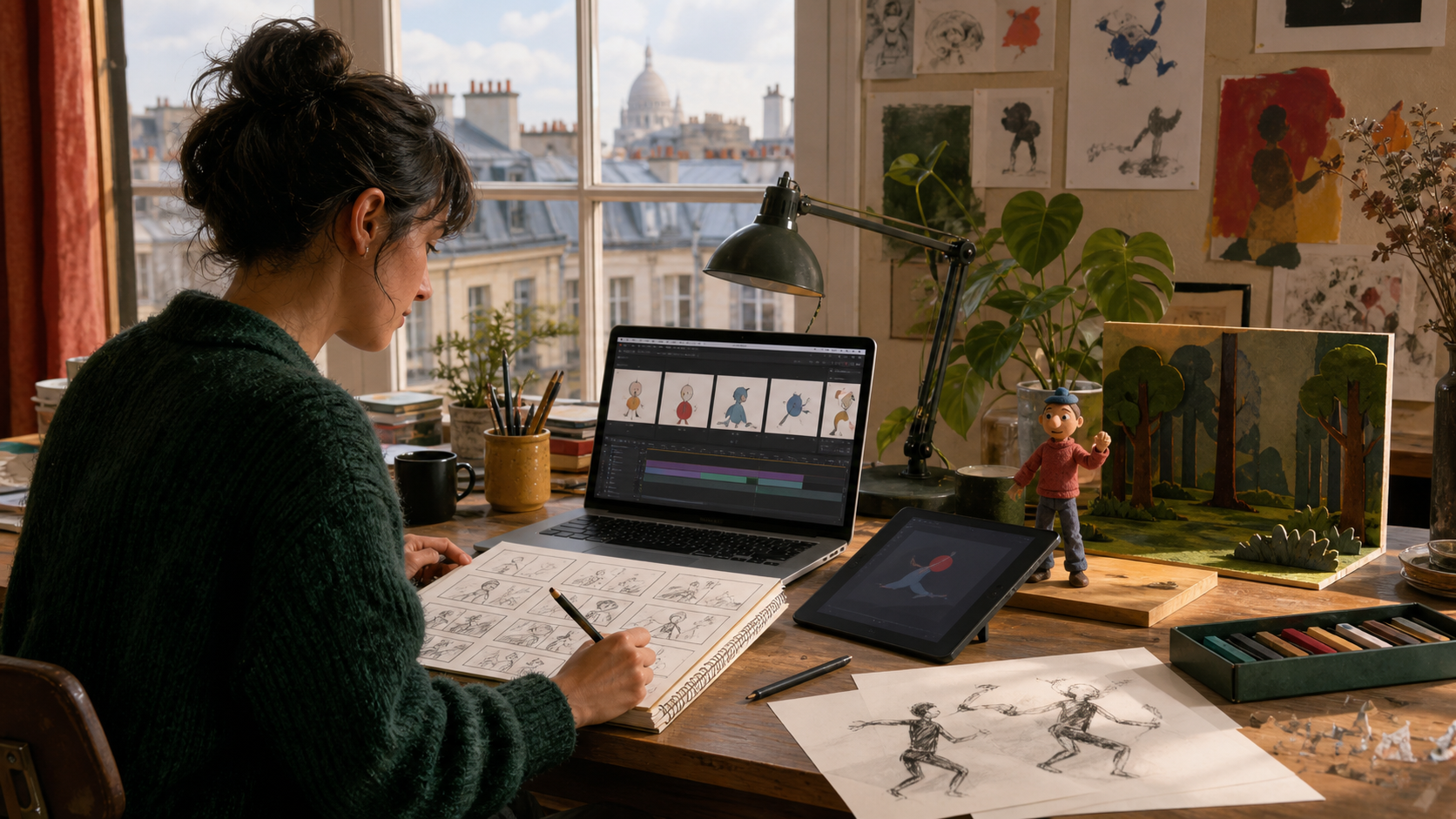
Paris is known around the world for painting, fashion, architecture, literature, and cinema, but the city also offers a rewarding path into the art of animation. For someone new to the subject, animation can initially seem divided between children’s entertainment, major studio films, technical software, and highly experimental work. In reality, it is a broad form of visual storytelling that combines drawing, movement, sound, design, performance, and filmmaking.
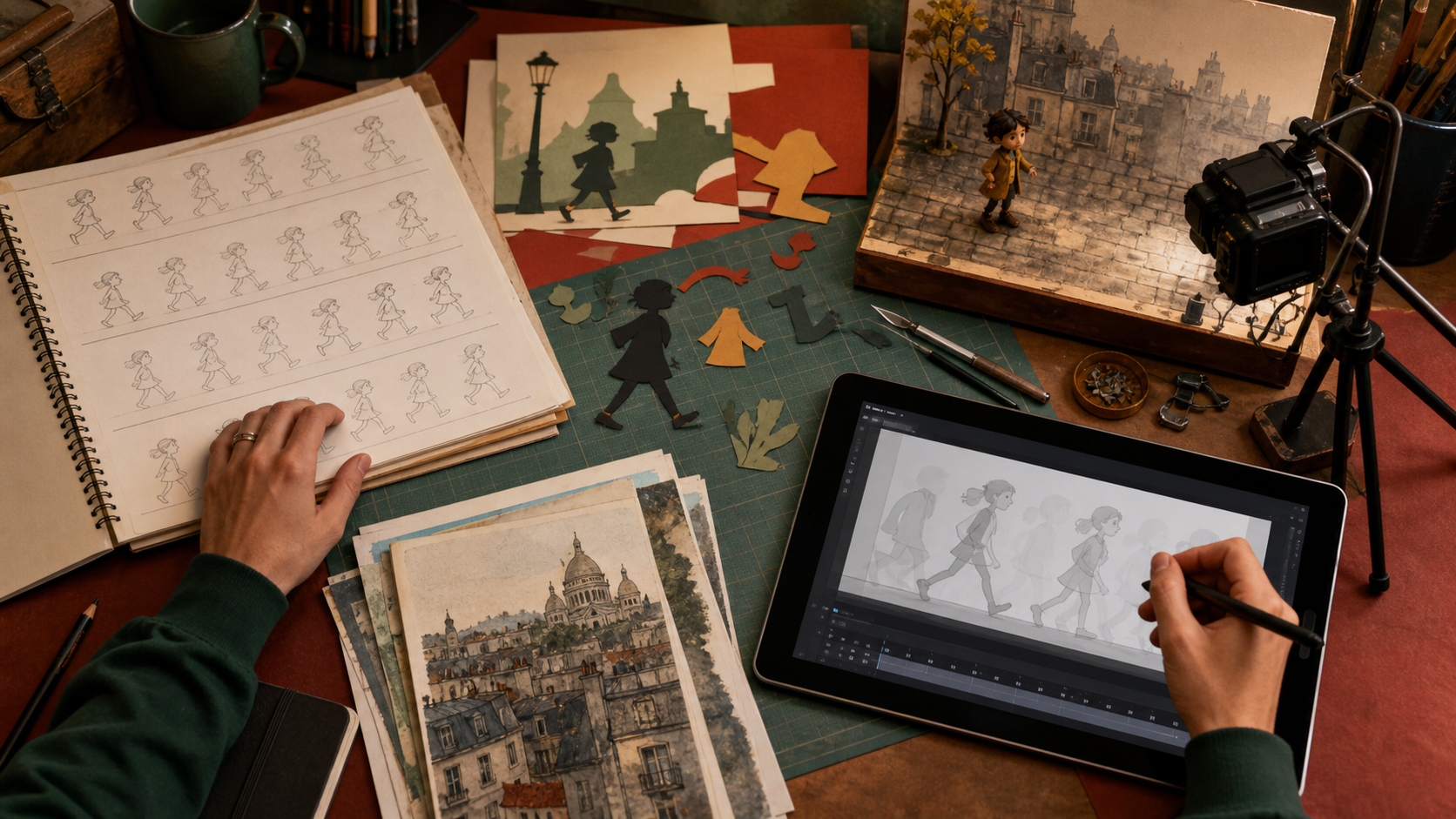
The best way to begin exploring animation in Paris is not to try to understand everything at once. Start with short films, learn to recognize a few major animation techniques, and pay attention to the kinds of stories and visual styles that interest you most. Festivals, independent screenings, student showcases, exhibitions, and cultural programs can all provide entry points into a medium that is much more varied than mainstream theatrical releases suggest.
Start With Animated Short Films
Short films are one of the easiest ways to discover the range of animation. A single program may present several films with completely different techniques, tones, countries of origin, and artistic goals. One film may be funny and accessible, while the next may be abstract, dramatic, political, musical, or emotionally difficult.
This variety helps beginners understand that animation is not one genre. It is a method of creating moving images that can be used for comedy, fantasy, documentary work, advertising, experimental art, education, personal storytelling, or adult drama.
Short films are also useful because they allow you to experience more creators in less time. Instead of committing to one feature-length production, you can watch several visual approaches and begin identifying what holds your attention. You may discover that you prefer hand-drawn character animation, stop-motion sets, minimalist graphic work, computer-generated imagery, or mixed-media films that combine several methods.
Learn the Main Animation Techniques
You do not need technical training to appreciate animation, but recognizing a few common approaches will make screenings more interesting.
Traditional or hand-drawn animation creates movement through a sequence of drawings. The finished work may look polished and fluid, loose and expressive, or deliberately rough.
Stop-motion animation photographs physical objects one frame at a time. Puppets, clay, paper, household objects, or carefully built miniature sets can all be used.
Computer animation includes both two-dimensional and three-dimensional work. It can imitate traditional drawing, create realistic environments, or build completely stylized worlds.
Cutout animation moves flat pieces of paper, photographs, or digital shapes. Its apparent simplicity can produce highly distinctive results.
Mixed-media animation combines drawing, photography, live action, collage, computer imagery, paint, objects, or other materials.
As you watch, consider whether the chosen technique supports the story. A technically complex film is not automatically better than a simple one. The strongest animation usually creates a meaningful relationship between movement, design, sound, timing, and emotion.
Use Festivals as Discovery Tools
Animation festivals can introduce viewers to films that may never receive ordinary theatrical distribution. Student projects, independent productions, experimental shorts, and work from small studios often depend on festivals to reach a public audience.
Croq’Anime, the historical name associated with the Paris animation festival, offers a useful example of this kind of platform. Its documented history reflects an emphasis on animated short films and on giving selected work a public setting. Historical materials connected with the festival also show how animation events can bring student films, independent creators, and more established professionals into the same broader conversation.
A festival program should not be treated as a list of films that every viewer is expected to like. Selection is a curatorial decision, not a guarantee of personal taste. Part of the experience is encountering unfamiliar work and deciding what succeeds for you.
After a screening, ask yourself:
- Which film remained in your mind?
- Did the visual style strengthen the story?
- How did sound or music affect the mood?
- Did the film communicate clearly without dialogue?
- Was the movement realistic, exaggerated, restrained, or symbolic?
- Did the ending feel earned?
These questions help turn casual viewing into a deeper appreciation of the craft.
Look Beyond Famous Characters and Studios
Beginners often enter animation through familiar franchises, television series, or major studios. Those productions can be valuable, but they represent only one part of the medium.
Independent animation may be less polished in a commercial sense, yet more personal or experimental. A filmmaker working with a small team can take visual risks that would be difficult within a large production. Student films may contain uneven elements, but they can also introduce striking ideas and new artistic voices.
Paris is a particularly suitable place to approach animation through this wider arts perspective. The city’s connection to cinema, illustration, graphic design, photography, performance, and visual art makes it natural to view animation as part of a larger creative culture rather than as an isolated form of entertainment.
Choose Programs That Match Your Interests
Before attending an animation event, look at the available description and decide what you want from the experience.
A family-oriented program may emphasize accessible stories and age-appropriate material. An experimental program may focus more on visual ideas than conventional storytelling. A student showcase may reveal emerging talent and educational work. A retrospective may explore the career of one filmmaker, studio, school, or artistic movement.
Also consider practical questions:
- Are the films presented in a language you understand?
- Are subtitles available?
- Is the material appropriate for the intended audience?
- Is the program made of shorts, features, or both?
- Does the event require advance reservations?
- Is the venue accessible for your needs?
Answering these questions prevents disappointment and helps you select an experience that fits your interests.
Build a Simple Animation Day in Paris
A beginner does not need an overloaded schedule. A useful animation-focused day might include one screening or festival program, time to reflect afterward, and a related visual-arts activity.
You could pair animated films with illustration, design, photography, film history, or contemporary art. The goal is not to force every activity to be specifically labeled “animation.” It is to notice how animation draws from many creative fields.
Afterward, save the names of films, directors, schools, or studios that interested you. Many short films travel through festivals before becoming easier to find elsewhere. Following the creators can lead you to future work and help you develop a more personal understanding of the medium.
Begin With Curiosity, Not Expertise
You do not need to know software, production terminology, or animation history before attending a screening. The most important skill is attention.
Notice what moves, what remains still, how long a scene lasts, how sound changes an image, and how a filmmaker guides your eye. Over time, you will begin recognizing techniques and artistic choices naturally.
Paris offers a strong setting for that discovery because animation can be approached alongside the city’s wider traditions of art and cinema. Start with a short-film program, remain open to unfamiliar styles, and follow the work that genuinely interests you.
Event identities, schedules, venues, admission policies, language options, and programming can change. Confirm current details with the relevant organizer, venue, or primary source before making plans.