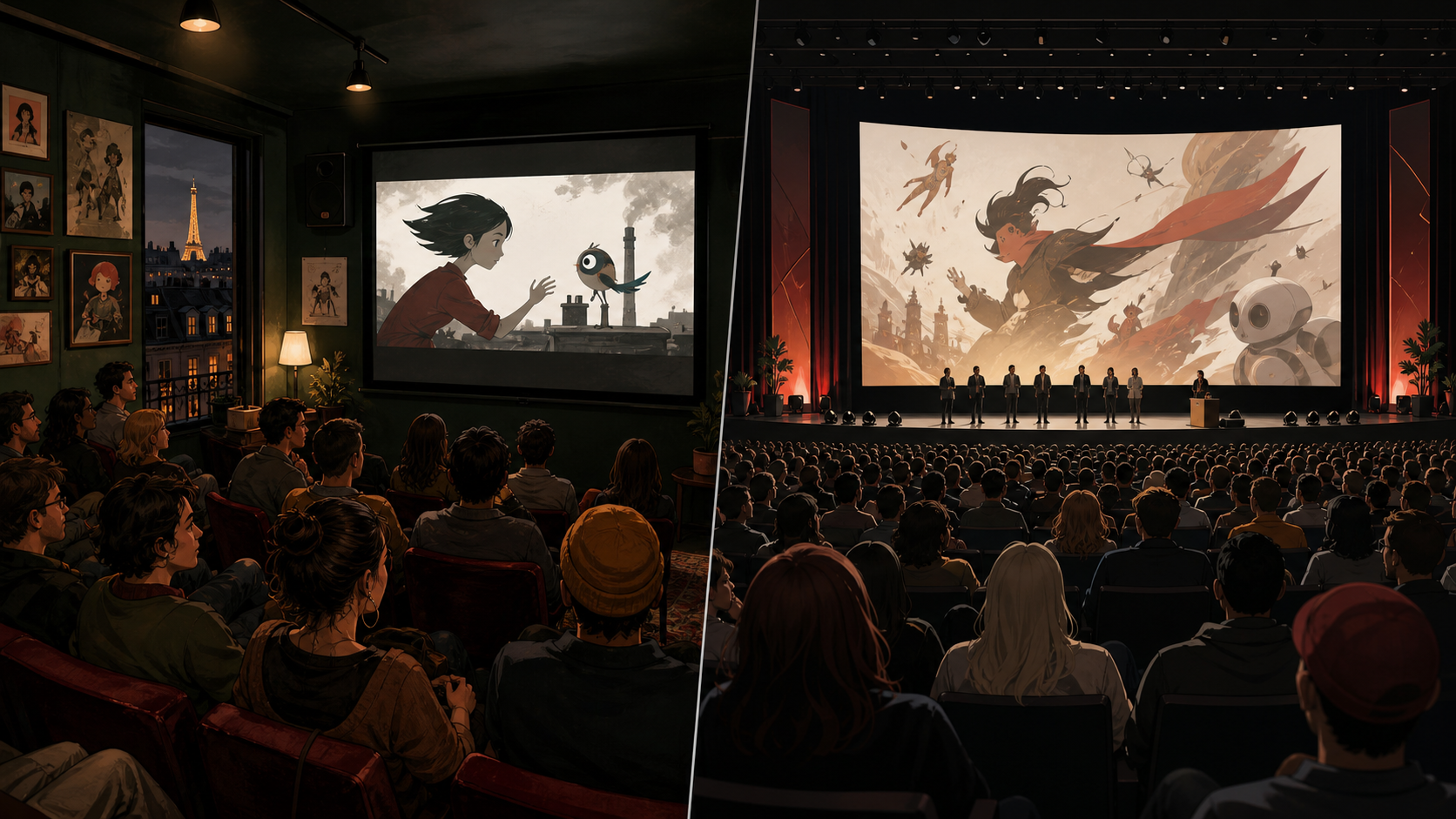
Animation festivals can look similar from a distance: films are selected, audiences gather, awards may be presented, and creators have an opportunity to show their work. In practice, however, the experience can vary enormously. A neighborhood-scale short-film festival does not serve the same purpose as a large international industry event, and a student showcase offers something different from a commercial convention built around famous franchises.
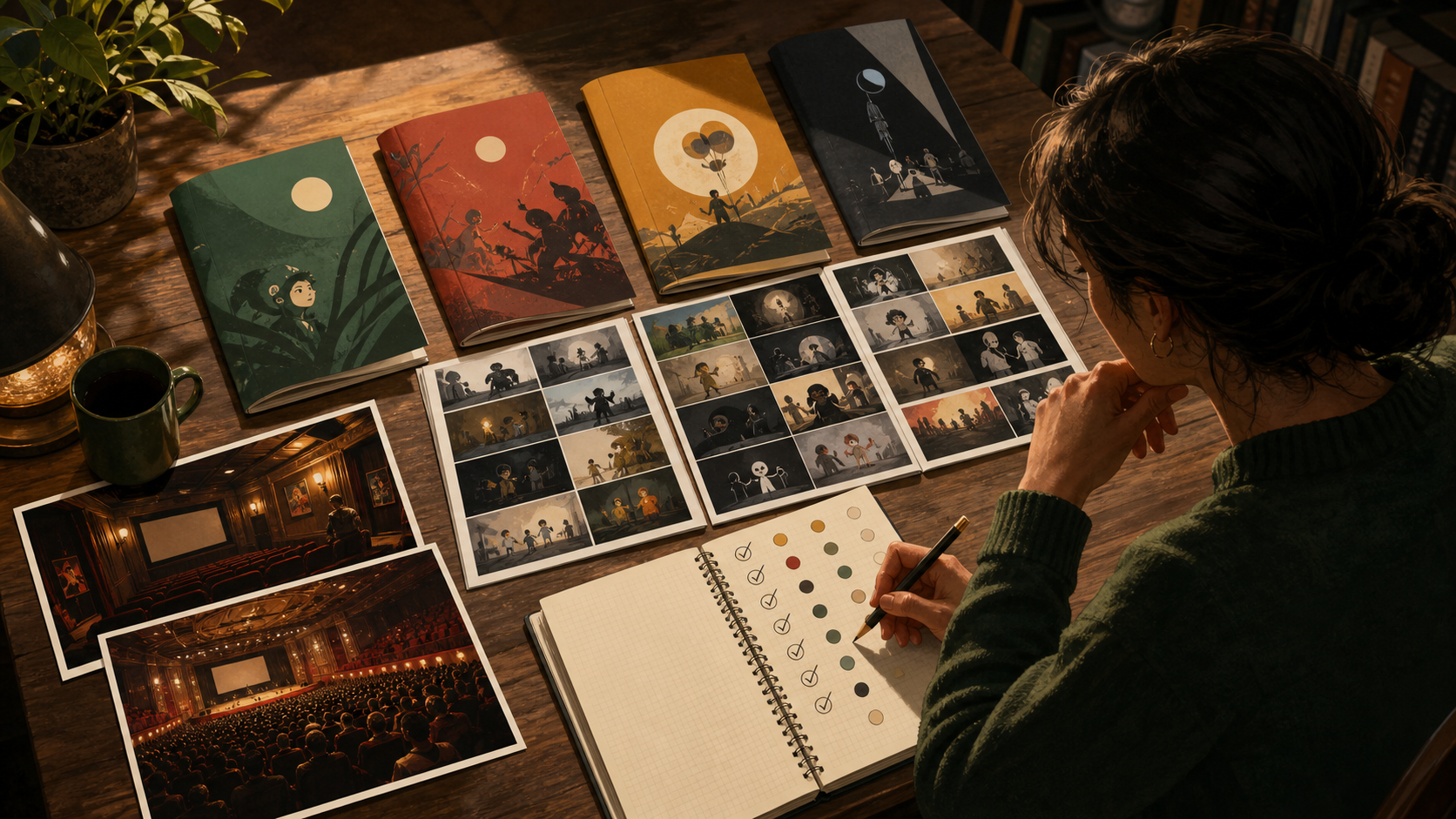
Croq’Anime historically represented the smaller, independent side of animation-festival culture in Paris. Its identity was connected with animated shorts, emerging creators, student work, international selections, and an atmosphere that made animation accessible outside the world of major theatrical releases. A festival such as Annecy operates at a much larger international and professional scale, with a major industry market alongside public screenings.
Neither model is automatically better. The right choice depends on what you want to watch, learn, discover, or accomplish.
Start With the Festival’s Main Purpose
The first comparison should be the event’s basic purpose.
Some animation festivals are primarily public cultural events. Their value comes from gathering a selection of films in one place and giving viewers access to work they might never encounter through ordinary cinemas or streaming platforms.
Other festivals operate partly as industry marketplaces. They may attract producers, distributors, broadcasters, studios, journalists, and professional organizations looking for projects, partnerships, or business opportunities.
Student showcases place more emphasis on new talent and educational development. Commercial conventions may focus on recognizable characters, merchandise, celebrity appearances, gaming, television, comics, or major entertainment brands.
Croq’Anime was not designed as a giant commercial expo. Its historical character was closer to an independent film showcase where animated shorts and their creators were the center of attention. That made it different from an event whose main attraction is scale, prestige, business activity, or famous intellectual property.
Before choosing any event, ask:
- Is the main purpose artistic discovery?
- Is it professional networking?
- Is it education?
- Is it entertainment built around familiar franchises?
- Is it a competition?
- Is it a marketplace?
- Is it a local cultural gathering?
The answer will shape almost every other part of the experience.
Compare Short Films With Feature-Length Programming
Short animation creates a different viewing experience from an animated feature.
A feature gives the filmmaker time to build a world, develop characters, and sustain a story over a longer period. A short film may have only a few minutes to establish its visual language and make an emotional, comic, dramatic, or experimental point.
A program of animated shorts can move rapidly between styles. One film may use hand-drawn characters, another stop motion, another computer animation, and another a mixture of photography, collage, live action, paint, or found objects.
This variety is one of the strongest reasons to attend a short-film festival. You are not committing to one visual world for an entire evening. You are encountering many filmmakers and approaches in a concentrated form.
The tradeoff is that short-film programs can be unpredictable. Some work may be immediately accessible, while other films may be abstract, uncomfortable, unfinished-looking, or deliberately challenging. That unpredictability is part of the appeal for viewers who want discovery, but it may not suit someone looking for one polished, familiar story.
Croq’Anime’s historical emphasis on animated shorts placed it firmly in the discovery category. A viewer interested in independent work, student films, unusual techniques, or emerging creators would likely value that more than someone seeking a major studio premiere.
Decide Whether You Want Discovery or Familiarity
Animation festivals often sit somewhere between two goals:
Discovery introduces audiences to unfamiliar filmmakers, experimental techniques, international work, and films without ordinary distribution.
Familiarity draws audiences through well-known studios, characters, directors, franchises, or commercial releases.
Neither approach is wrong. They satisfy different expectations.
An independent festival can surprise you. You may enter without recognizing a single title and leave remembering a three-minute film made by a student or a small creative team.
A major festival or convention may offer the excitement of seeing anticipated work, hearing from established professionals, or experiencing the broader culture surrounding well-known animation.
Croq’Anime’s value came largely from work outside the mainstream. That meant the festival’s appeal depended less on celebrity recognition and more on curiosity. The audience had to be willing to encounter films without a familiar brand guaranteeing what the experience would be.
When comparing events, consider whether you want to be surprised or reassured. A discovery-oriented festival asks more from the viewer, but it can also introduce work that would otherwise remain invisible.
Compare Audience Atmosphere and Scale
Festival size changes the atmosphere.
A smaller event can feel personal. Viewers, students, filmmakers, and organizers may share the same spaces, and a screening can feel like a direct encounter with the people responsible for the work.
A large international festival offers greater scale: more screenings, more venues, larger professional participation, wider media attention, and a much denser schedule. That scale can create energy and opportunity, but it can also make the event harder to navigate.
Croq’Anime’s Paris setting and historical association with the Théâtre de Ménilmontant gave it the character of a focused cultural event rather than a giant industry gathering. Annecy, by comparison, is internationally known for combining a major public festival with a professional animation market.
The choice is not simply “small versus large.” Consider what scale does for your goals:
- Smaller events may offer intimacy and easier discovery.
- Larger events may offer range, visibility, and professional opportunity.
- Neighborhood events may feel connected to the surrounding community.
- destination festivals may justify an entire trip but require more planning.
A casual viewer may prefer an event where attending one program feels complete. A professional may value a larger event with many meetings, screenings, and industry activities.
Understand Selection and Awards
Selection and awards are related, but they are not the same.
A selected film has been chosen to appear within a festival’s program. That alone can be meaningful, especially for students, independent filmmakers, and small production teams. It places the work before an audience and connects it with other films selected for the event.
An award gives additional recognition to a film, filmmaker, composer, designer, or other creative contribution. Awards may reflect technical achievement, storytelling, originality, music, visual design, humor, emotional impact, or a jury’s particular priorities.
Viewers can use award winners as one way to begin exploring a large program, but awards should not be treated as a complete ranking of artistic worth. A winning film may reflect the jury’s standards, while another selected film may connect more strongly with your own interests.
For filmmakers, the most useful question is not simply whether a festival gives awards. It is whether the event’s selection and recognition system fits the type of work being submitted.
A visually experimental short may suit one festival better than a dialogue-heavy comedy. A graduation film may find a stronger audience in a student-friendly program than in an event centered on commercial feature releases.
Compare Opportunities for Viewers and Filmmakers
A viewer and a filmmaker may judge the same festival very differently.
A viewer may care about:
- the quality and variety of the films;
- the length of the programs;
- language and subtitles;
- age suitability;
- venue comfort;
- ticket access;
- opportunities to hear filmmakers discuss their work.
A filmmaker may care about:
- eligibility;
- submission rules;
- permitted running time;
- fees;
- premiere requirements;
- accepted techniques;
- jury composition;
- awards;
- professional visibility;
- whether the audience is likely to understand the work.
Someone attending as a student may be interested in both sides. Watching selected work can become a practical education in pacing, sound, visual clarity, and how a short film communicates with an audience.
Croq’Anime historically welcomed work from different experience levels, including student and independent creators. That kind of openness can be valuable to artists who are still developing their voice and may not yet have access to larger professional networks.
Consider Location and Cultural Setting
The city and venue affect how a festival feels.
A neighborhood theater can create a different relationship between the event and its audience than a large convention center or multi-venue industry festival.
Paris offers a natural setting for animation because the medium overlaps with cinema, illustration, graphic design, visual art, music, photography, performance, and storytelling. An animation event in Paris can therefore feel connected to the city’s broader cultural life rather than isolated as a specialist activity.
Croq’Anime’s association with Ménilmontant supported its smaller, independent identity. The setting reinforced the idea of animation as something that could belong to a neighborhood audience as well as students and professionals.
Annecy offers a different setting. The festival transforms its host city into an international center for animation, drawing visitors and industry participants from around the world.
When comparing events, ask whether the location is merely where the festival happens or an important part of the experience itself.
Check Practical Details Without Letting Them Define the Choice
Practical details matter, but they should come after you understand the event’s purpose.
Before attending, compare:
- current operating status;
- dates;
- venue or venues;
- program length;
- ticketing;
- reservations;
- language and subtitles;
- age recommendations;
- accessibility;
- transportation;
- accommodation, if travel is required.
An event may look perfect artistically but be a poor practical fit. A screening may conflict with other plans, require travel across a city, or present films without subtitles in a language you understand.
At the same time, do not choose an event only because it is convenient. A slightly less convenient festival may offer a much stronger match for your interests.
A Simple Way to Make the Final Choice
Choose the event that best matches your main reason for attending.
Choose a smaller independent festival when you want:
- short-film discovery;
- emerging and student creators;
- experimental work;
- a more intimate atmosphere;
- animation treated primarily as an art form.
Choose a major international festival when you want:
- a large and varied program;
- industry visibility;
- major professional participation;
- premieres;
- markets, conferences, or broader networking opportunities.
Choose a commercial convention when you want:
- familiar franchises;
- merchandise;
- celebrity guests;
- fan culture;
- entertainment extending beyond film.
Choose a retrospective or museum program when you want:
- historical context;
- concentration on one artist, studio, technique, or period;
- curated interpretation;
- deeper study rather than festival competition.
Croq’Anime historically occupied a useful place within this spectrum. It was smaller than the largest international festivals, more focused on independent short animation than commercial spectacle, and accessible to viewers and creators who wanted to experience animation beyond mainstream releases.
The best animation event is not necessarily the largest or most famous. It is the one whose films, audience, scale, and purpose match what you hope to discover.
Festival identities, schedules, locations, ticketing, submission rules, and programming can change. Confirm current information with the relevant organizer, venue, or primary source before making plans.